Hermann Hesse and the Concept of Yin and Yang (2)
Just as Sinclair in Hesse's Demian integrates light and dark to discover 'Abraxas,' true growth occurs only when we fully embrace both sides of our inner world to become our complete, authentic selves.
The central theme of Hesse's masterpiece, Demian, is deeply rooted in Yin and Yang.
Sinclair's childhood represents a warm, moral "world of light," built on family and faith.

However, Sinclair faces his first major ordeal.
Exploited by Franz Kromer, he is dragged into a "dark world" filled with lies and fear.

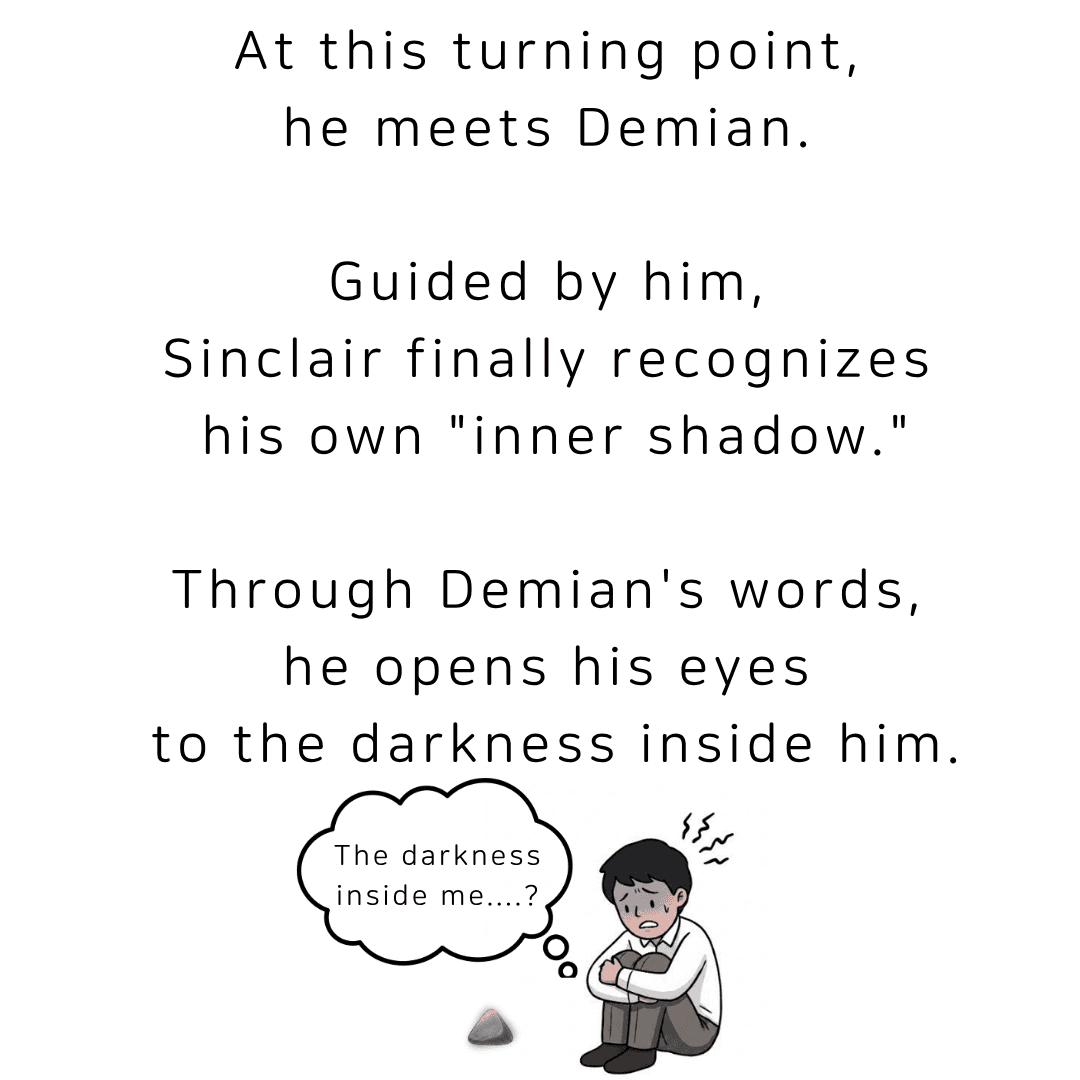
At this turning point, he meets Demian.
Guided by him, Sinclair finally recognizes his own "inner shadow."
Through Demian's words, he opens his eyes to the darkness inside him.
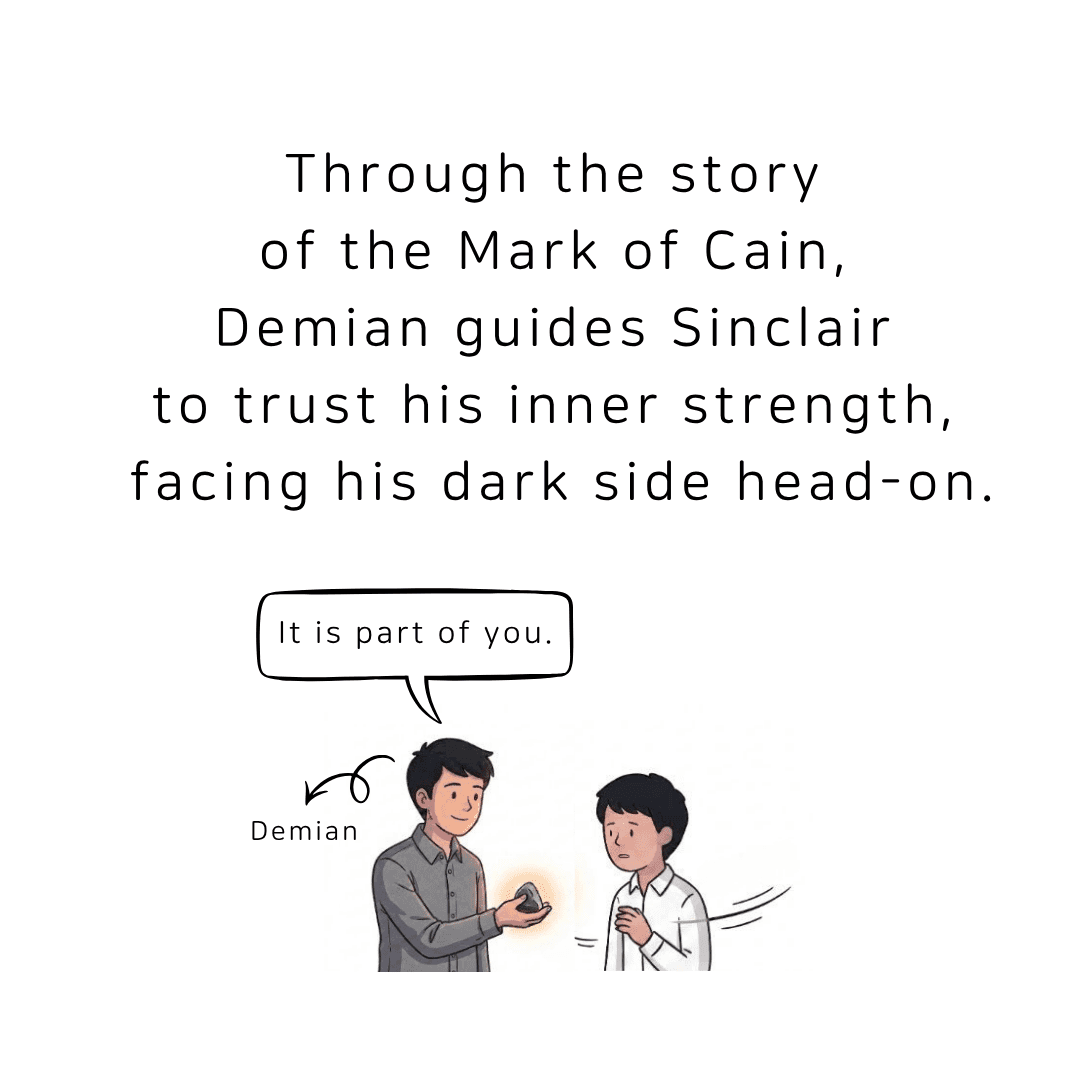
Through the story of the Mark of Cain, Demian guides Sinclair to trust his inner strength, facing his dark side head-on.
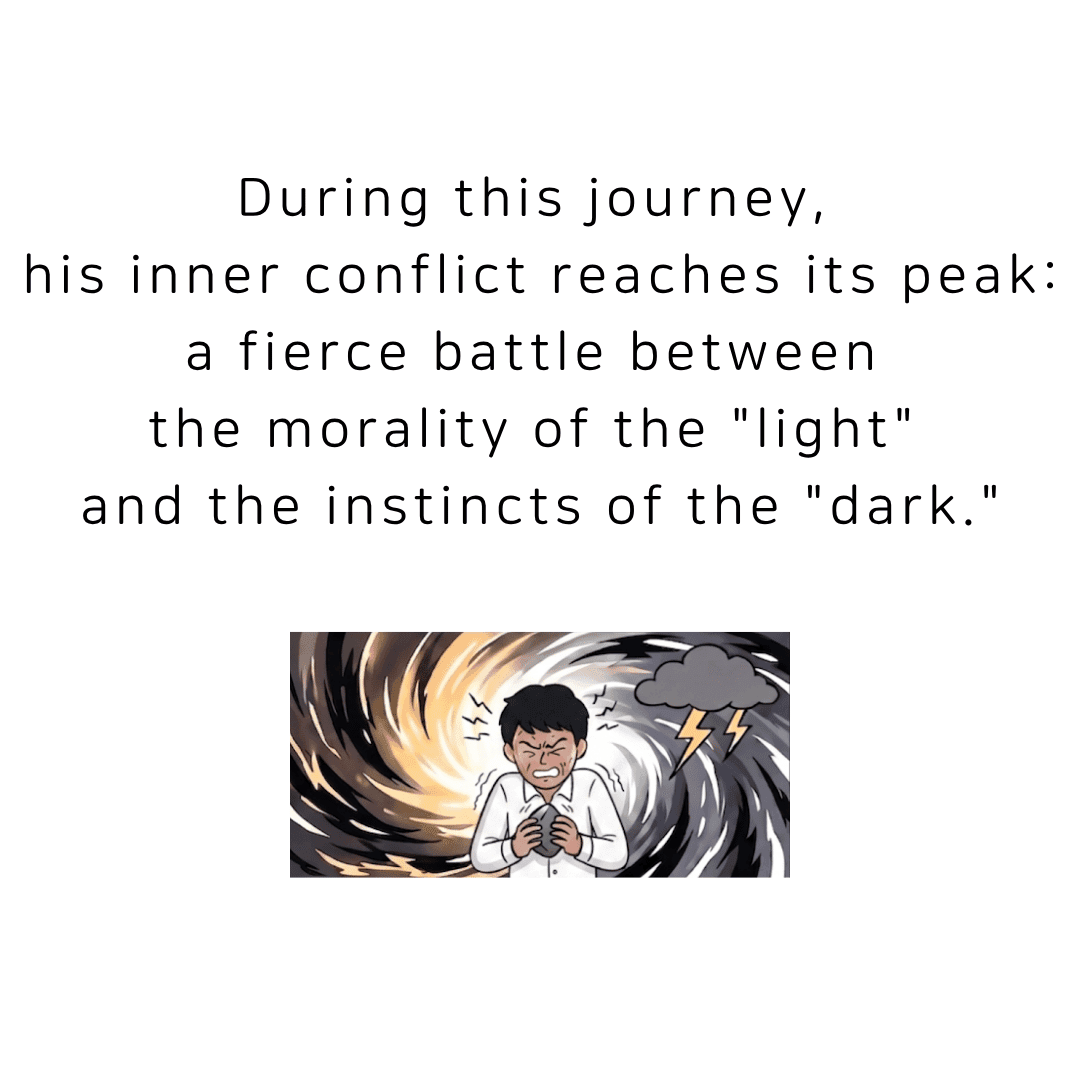
During this journey, his inner conflict reaches its peak: a fierce battle between the morality of the "light" and the instincts of the "dark."
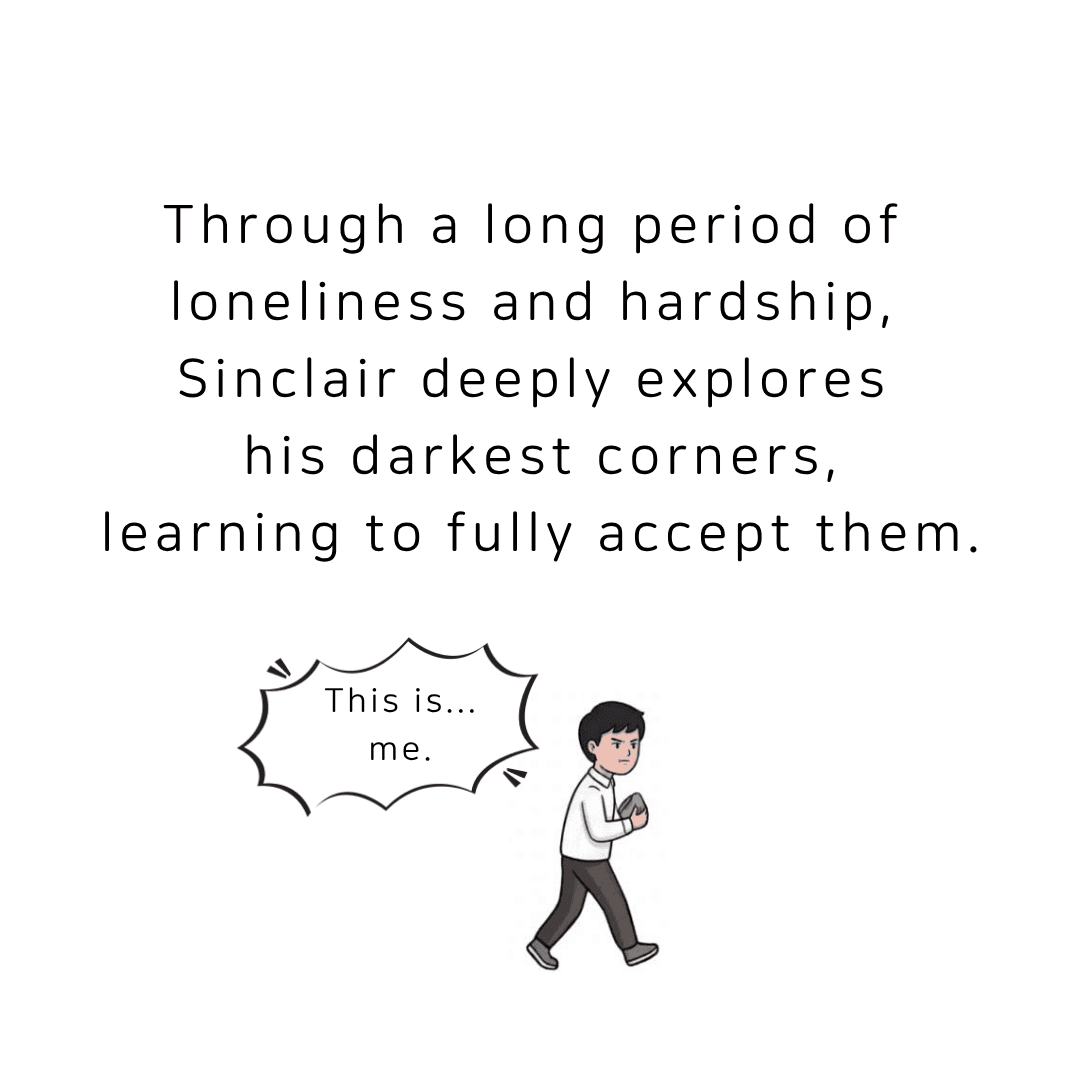
Through a long period of loneliness and hardship, Sinclair deeply explores his darkest corners, learning to fully accept them.
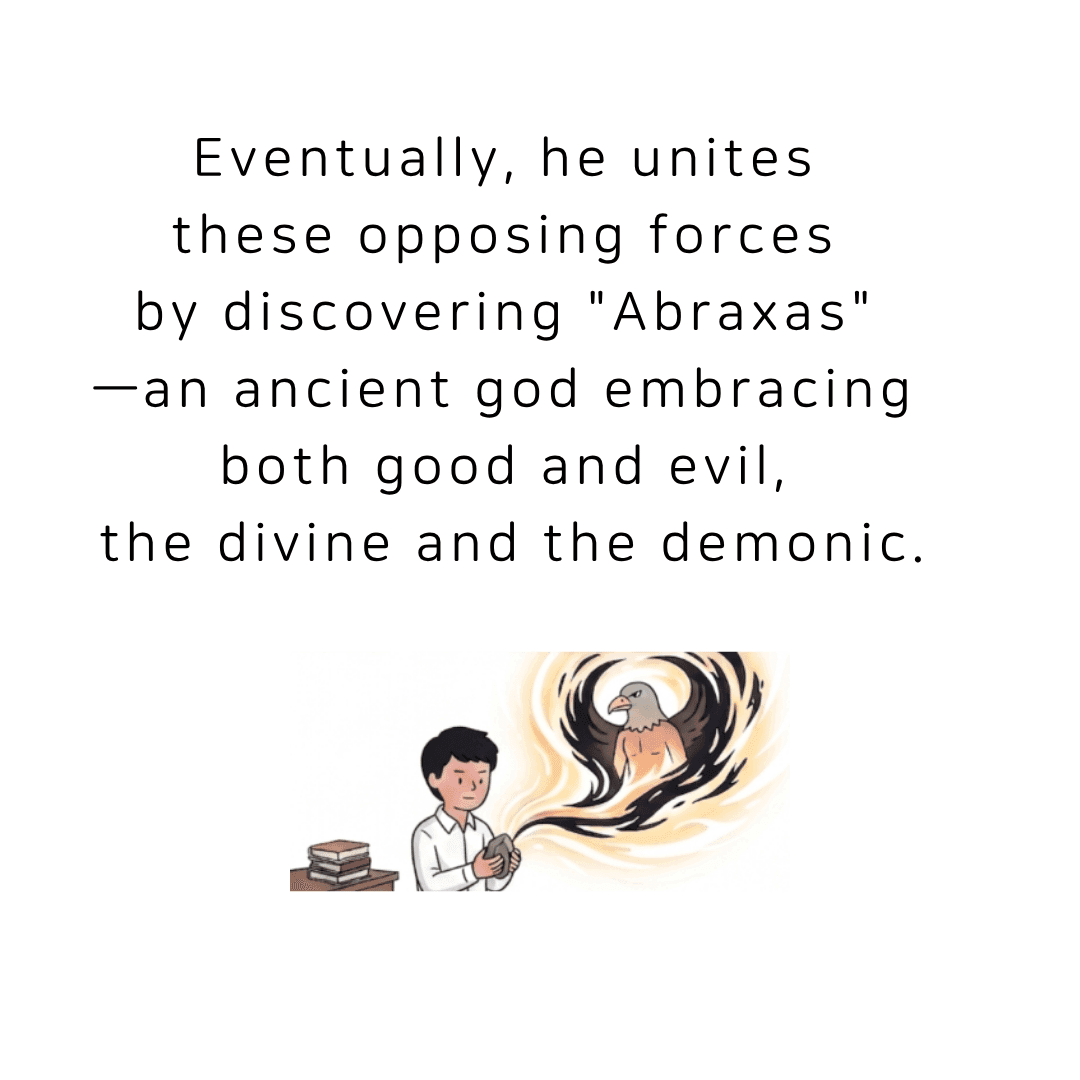
Eventually, he unites these opposing forces by discovering "Abraxas"—an ancient god embracing both good and evil, the divine and the demonic.
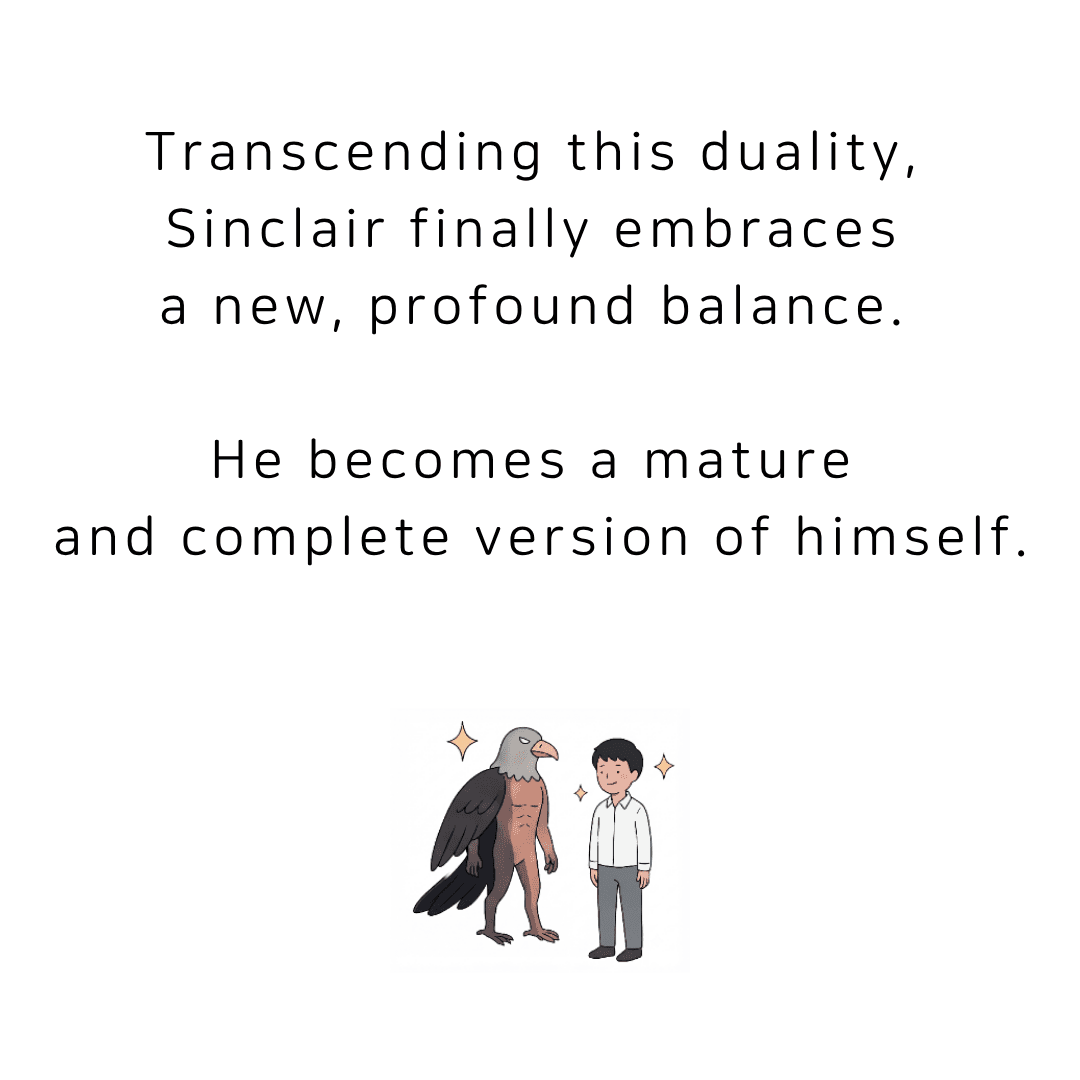
Transcending this duality, Sinclair finally embraces a new, profound balance.
He becomes a mature and complete version of himself.
We often fear and suppress our inner shadows. But true growth happens only when we embrace both: light and dark, reason and instinct.
The fierce collision of the two worlds within you is a noble struggle to birth your own "Abraxas".
We cheer on your journey to break through boundaries, taking flight toward your true, authentic self.